
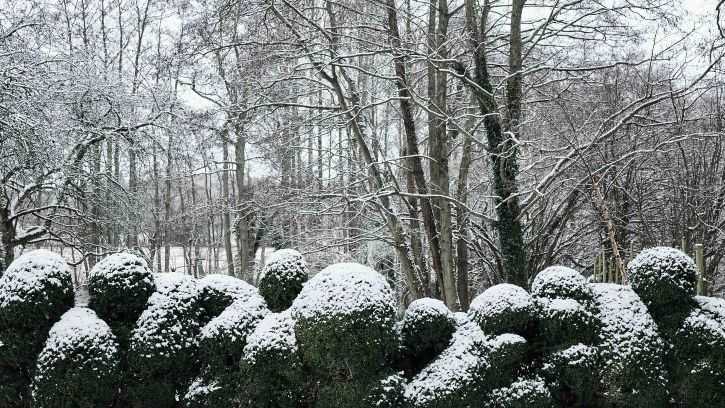
There's less to do in winter, but a little care now pays off in spring. Growth slows right down between December and February, which makes this a good time to protect what you have, catch up on structural jobs and plan the year ahead.
Stay off frosty or waterlogged lawns
Try to stay off the lawn when it's frosty or waterlogged, as footprints can damage the grass. Frozen grass blades snap when they're walked on, leaving brown footprints that can last for weeks. On wet ground, feet and wheelbarrows compact the soil and squeeze out the air that roots need. On heavy, clay-based soils, compaction soon leads to puddles and moss.
If you need to cross the lawn regularly, lay a few boards or stepping stones. Hold off mowing unless the grass is still growing and the ground is firm. If you do mow, just take the tips off with the blades set high, and keep clearing leaves and fallen twigs.
Prune while plants are dormant
Winter is the traditional time to prune apple and pear trees and many deciduous shrubs, while they're leafless and you can see their shape. Start by removing dead, damaged or crossing branches, then thin out crowded growth to let in light and air.
One important exception: don't prune plums, cherries or other stone fruit in winter. They're vulnerable to silver leaf disease, which enters through pruning cuts in cold, wet weather, so leave them until summer. Wisteria benefits from a winter prune too: cut last summer's side shoots back to two or three buds in January or February.
Plan bigger jobs now
Winter is a good time to plan bigger jobs, such as clearances, fencing or new beds, ready for spring. With the borders bare, it's easier to see the shape of the garden and what isn't working.
It's also the season for bare-root hedging and trees, which are cheaper than pot-grown plants and establish well. They can be planted from November to March whenever the ground isn't frozen or waterlogged. If winter storms have damaged fences, get repairs booked in early: diaries fill up quickly once spring arrives.
Check hedges for nesting birds
Before cutting hedges in late winter or spring, check carefully for nesting birds. It's an offence to damage or destroy an active nest under the Wildlife and Countryside Act 1981. The main nesting season runs from March to August, and some birds start earlier in a mild spell. If a hedge needs a cut before spring, do it by the end of February and look closely first.
Keep tools and paths in order
Use the quiet months to clean, sharpen and oil tools and to get the mower serviced before the spring rush. Outside, keep paths and patios clear of moss, algae and wet leaves, which make them slippery, and check that drains and gullies are running freely.
Looking after a larger site?
On school, care home and communal grounds, winter is about safe access and early planning. Paths, steps and car parks need to stay clear of leaves and moss, and storm damage such as fallen branches or loose fence panels needs dealing with quickly. It's also the right time to agree next year's grounds contract: the visit frequency, start date and budget. That way the first spring cuts happen on time rather than after the grass has got away.
Planning ahead?
We can quote now for spring work, winter clearances or a year-round grounds maintenance contract anywhere in Worcestershire. Ask for a free quote.