
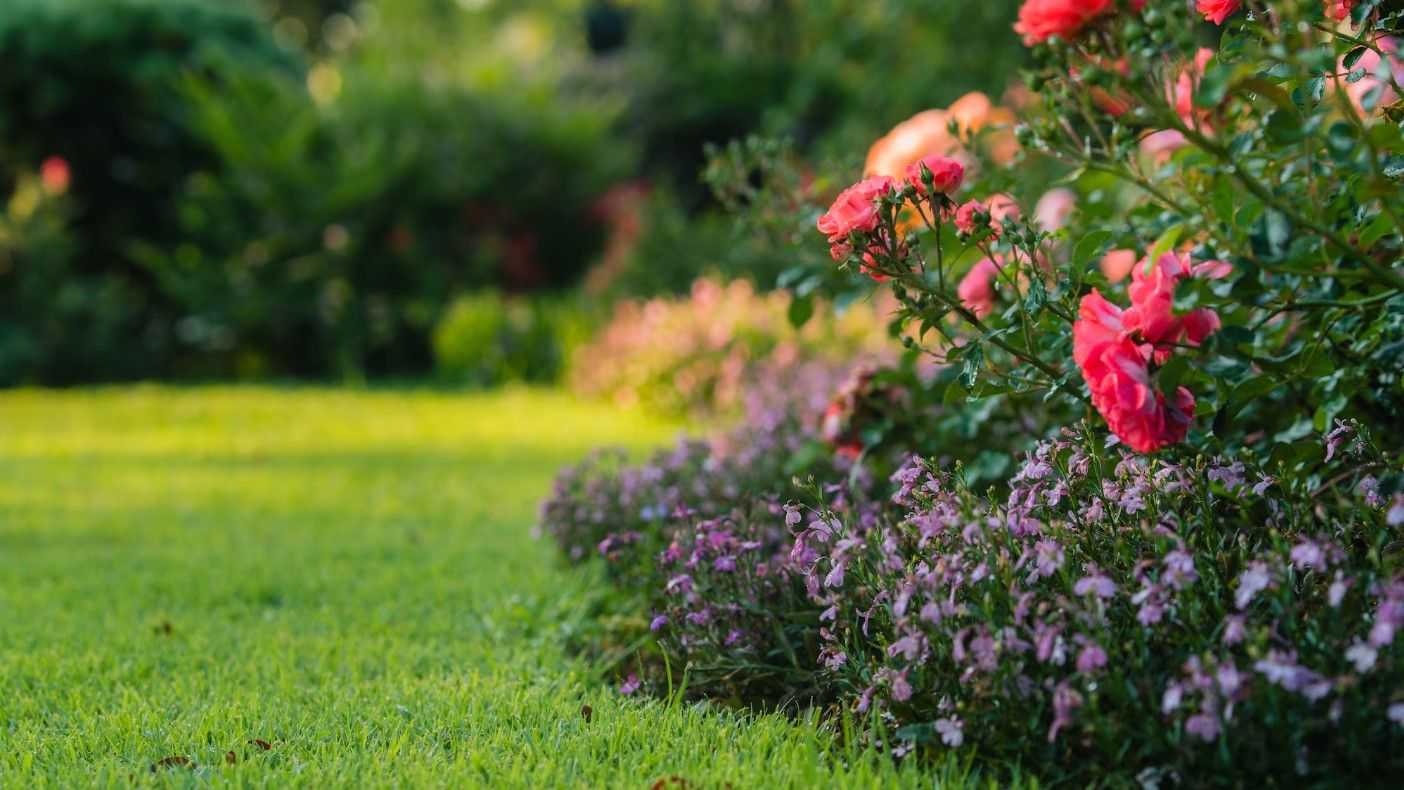
A few simple steps in spring set your lawn up for the rest of the year. What you do between March and May largely decides how thick, green and weed-free the grass looks by summer.
Start mowing once growth is steady
Start mowing once the grass is growing steadily, usually from March or April as the soil warms. Keep the blades set high for the first few cuts, since removing too much at once can weaken the grass. Wait until the surface is dry enough to walk on without leaving marks.
A good rule all year is never to take off more than a third of the grass's height in one cut. Lower the blades a little at a time over several weeks until you reach your summer height, around 3–4cm for most family lawns. Make sure the blades are sharp: blunt blades tear the grass, and the torn tips turn brown.
Rake out moss and dead material
Rake out moss and dead material, and clear away winter leaves and debris so light and air can reach the soil. In spring, keep this light. A firm going-over with a spring-tine rake is enough, and heavy scarifying is better left until autumn, when the lawn has time to recover.
If moss has taken over, treat it with a moss killer first, then rake it out once it has turned black, usually after a couple of weeks. Moss is a sign of something else, such as shade, poor drainage, compacted soil or mowing too short, so it will come back unless the cause is dealt with.
Feed and repair
From April, once the grass is growing well, apply a spring lawn feed. Spring feeds are higher in nitrogen to encourage green, leafy growth. Choose a day when light rain is forecast, or water it in, and follow the rates on the pack, as too much can scorch the grass.
Patch bare or thin areas by sowing grass seed once the soil has warmed up, usually from mid-April. Loosen the surface first, sow at the rate on the pack, rake it in lightly and keep it moist until the new grass is established.
Edges, borders and weeds
Tidy the border edges and deal with weeds before they spread. Re-cutting a crisp edge with a half-moon edger, then trimming it after each mow, makes the whole garden look cared for. In beds, hoe or hand-weed on dry days while the weeds are still small. In the lawn, dig out dandelions and other rosette weeds with a weeding knife, or spot-treat them. Once borders are weeded and the soil is moist, a layer of mulch will keep new weeds down.
Mind the birds
Spring is the main nesting season. Leave any major hedge cutting until the end of summer, and check carefully for active nests before even a light trim.
Looking after a larger site?
On school grounds, care home gardens and communal areas, spring is when grass starts to look untidy fastest. Getting the first cuts, edging and weed control done early sets the standard for the year, ahead of open days, visits and the summer term. During peak growth, from April to June, most sites need cutting every week or fortnight to stay neat.
Want it taken care of?
We offer regular garden and grounds maintenance and ride-on mowing for larger lawns across Worcestershire. Ask for a free quote.