
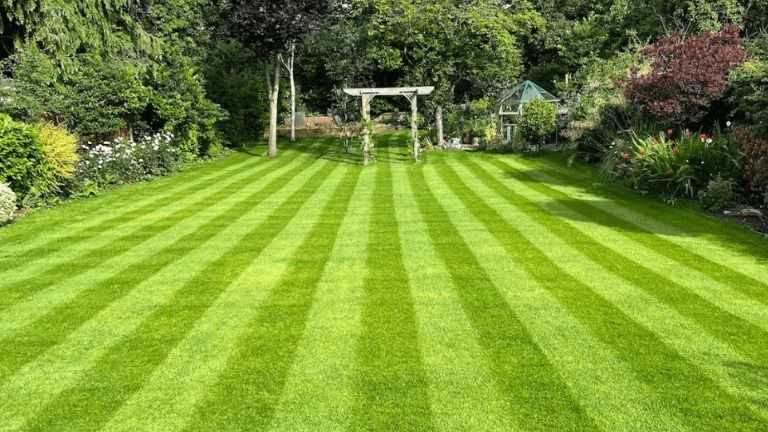
Hot, dry spells are hard on lawns. Summers have been getting drier, and hosepipe bans are possible in a dry year, so it pays to help the grass look after itself rather than relying on the sprinkler.
Raise the mowing height
Raise the mowing height in hot weather. Slightly longer grass shades the soil and holds on to moisture better. Lifting the blades by a centimetre or so during a dry spell makes a noticeable difference. When growth slows in the heat, mow less often rather than shorter.
In very dry weather, you can leave short clippings on the lawn instead of collecting them. They return moisture and nutrients to the soil. If the clippings are long or wet they'll mat on the surface, so collect those. Keep the blades sharp, too: grass torn by blunt blades loses more water and browns at the tips.
Water wisely, if at all
If you water, do it less often but more deeply, early in the morning or in the evening. A thorough soak every week or so encourages roots to grow down to where the soil stays moist. A light sprinkle every day does the opposite: roots stay near the surface, where they dry out first. Watering in the heat of the day wastes much of it to evaporation.
An established lawn doesn't need watering to survive. Save the water for grass that was sown or turfed this year, which does need help through its first summer, and for new plants in borders. Use water from a water butt where you can, and check for any hosepipe restrictions in your area.
Don't panic about brown grass
A lawn that turns brown in a dry spell usually recovers once the rain returns, so don't worry too much. Browning is the grass going dormant to protect itself, not dying. While it's brown, avoid feeding it (fertiliser on dry grass can scorch), keep foot traffic down where you can, and let it rest. Any thin patches that remain once the weather breaks can be reseeded in early autumn.
Other summer jobs
- Hedges: many hedges get their main trim in late summer, once the nesting season is over. Check carefully for active nests before you start. Fast growers such as privet may need two or three trims over the season.
- Edges: crisp lawn edges make even a tired, dry lawn look cared for, and they only take minutes after each mow.
- Weeds: hoe borders on hot, dry days, when weed seedlings wither quickly where they're cut.
Looking after a larger site?
Summer is peak growth and peak use: sports days, events, visitors and residents using outdoor space. On large lawns, playing fields and estate grounds, keeping to a regular cutting cycle matters more than ever, because grass that is left to get long takes several cuts to recover. Plan cuts around events and term dates so grounds look their best when people are there to see them. Even when the grass browns, sharp edges, trimmed hedges and clear paths keep a site looking well managed.
Large area to keep on top of?
Our ride-on mowing covers big lawns, fields and open grounds quickly, on its own or as part of a commercial contract. Ask for a free quote.